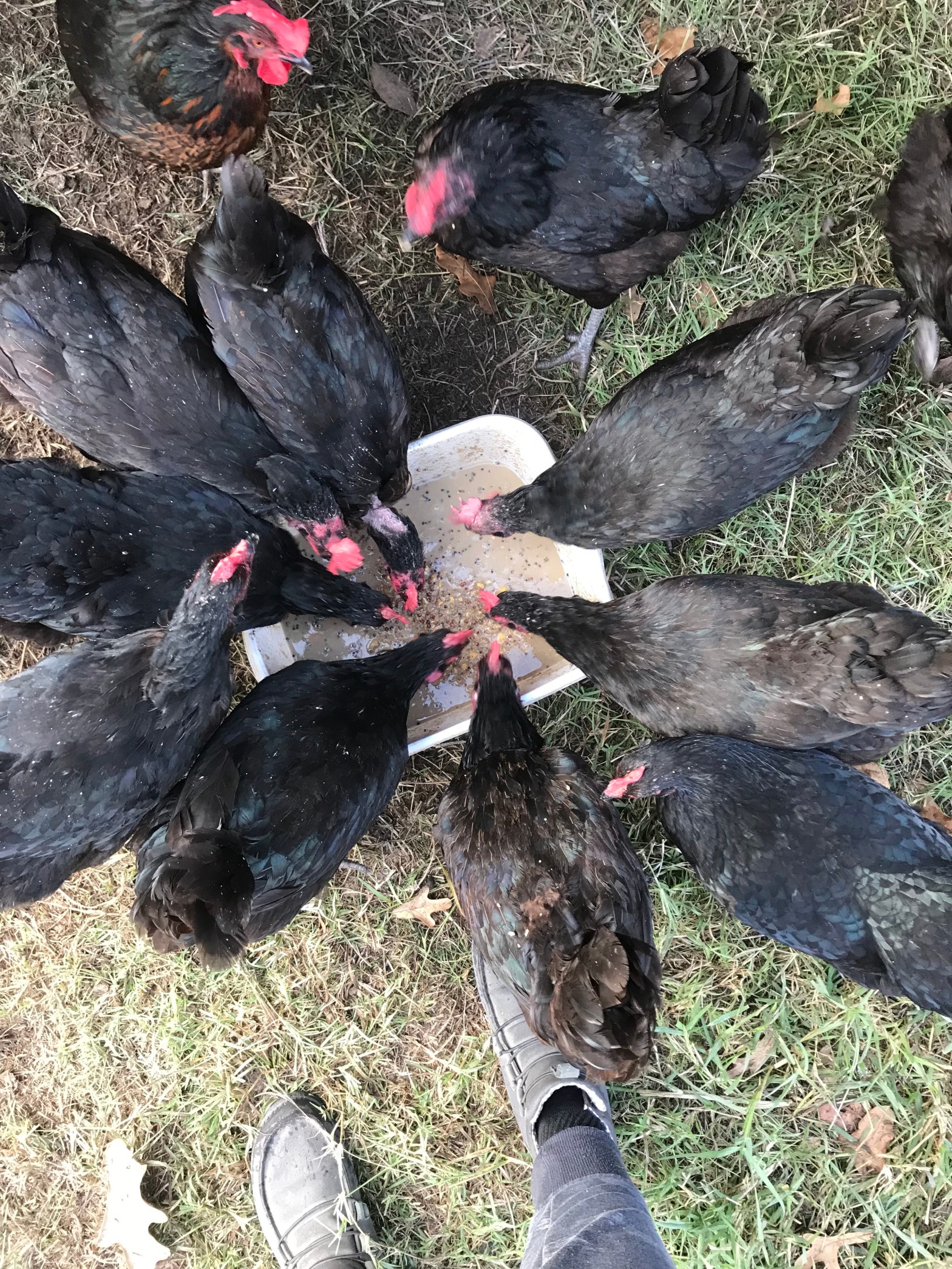
Hear me out. I’ve (Randi) dabbled in fermentation for the last 10 years or so. What started out as simple kombucha, led to sauerkraut in a crock, kefir & yogurt for a time, and several attempts at water kefir and a ginger bug. And of course a love hate relationship with sourdough. There was even an attempt at New York Deli Style pickles – but those were worse than Aunt Bee’s. But fermenting chicken feed? That’s like next level.
I’m a firm believer that the closer to nature you raise an animal, the healthier and typically happier it will be. Happy, healthy animals make for good, nutrient dense food. When feeding show pigs, there is typically anything but a natural feed process happening, and with the amount of feed we’re pouring daily, I felt an obligation to look where corners could be cut elsewhere – our chickens.
Our chickens reside in a mobile chicken tractor we constructed earlier this year vs being kept in the barn (which is gross – not sufficient air flow, chicken poop dust on everything, no foraging). No free ranging here since nothing will change a good mood to bad faster than stepping out on the porch barefoot and straight into chicken poop. The chicken tractor was our solution. Move it around every few days and the chickens get to forage through fresh dirt & pasture grasses, plus any bugs they find. However, we still have to supplement them with feed.
Now granted, it’s not nearly as much feed as when they were stationary in the barn, but still. If you’re feeding animals, you know those costs have increased over the last few years.
So how does one offset that? My first rabbit hole solution was to feed them wet feed, because it swells and creates more volume. (As in 1-2 times more volume.) But the more I looked, the more I came across information about fermenting your chicken feed.
Just like fermented foods are good for our guts & health, it can be for animals as well. The only thing different in wet feed and fermented feed is a few days time.
We feed a combination of feeder pellets & chicken scratch (though to be honest, we just recently mixed in some Oats & Beet Pulp leftover from pigs as to not waste anything) from our local feed store.
To make it: I hand mix equal parts of feeds filling halfway in a 5 gallon bucket, and then add enough water to completely saturate all of the feed, and then add more until you’ve got about 2 inches of liquid on top of your feed. Give it a good stir with a long spoon or your arm if you don’t mind getting grubby, and then place a lid on it to keep flies & dust out. In 2-3 days, you should notice your saturated feed mixture producing tiny bubbles. That is your fermentation.
I would feed this within a few days of your mixture starting to bubble, because like any type of fermentation, it can go from healthy to rotten real quick if not kept under ideal conditions (like in the refrigerator), and you’ll know it on smell alone. This is my amount for my flock of 12, for 3-4 days at a time, so you may need to make less or more depending on how many hens you have.
Interestingly, I seem to have less waste from my laying hens, and their poop isn’t as nasty as it has previously. I feel like I can speak for most of us in a similar fashion in the difference of eating nutritious food vs fast food. There is a difference, am I right?
With laying pellets, the hens seemed to throw, break & obliterate them. Now it does take them a bit longer to eat on the fermented feed since it’s a soupy texture, but I figure that doesn’t matter since they’re eating every chance they get anyhow.
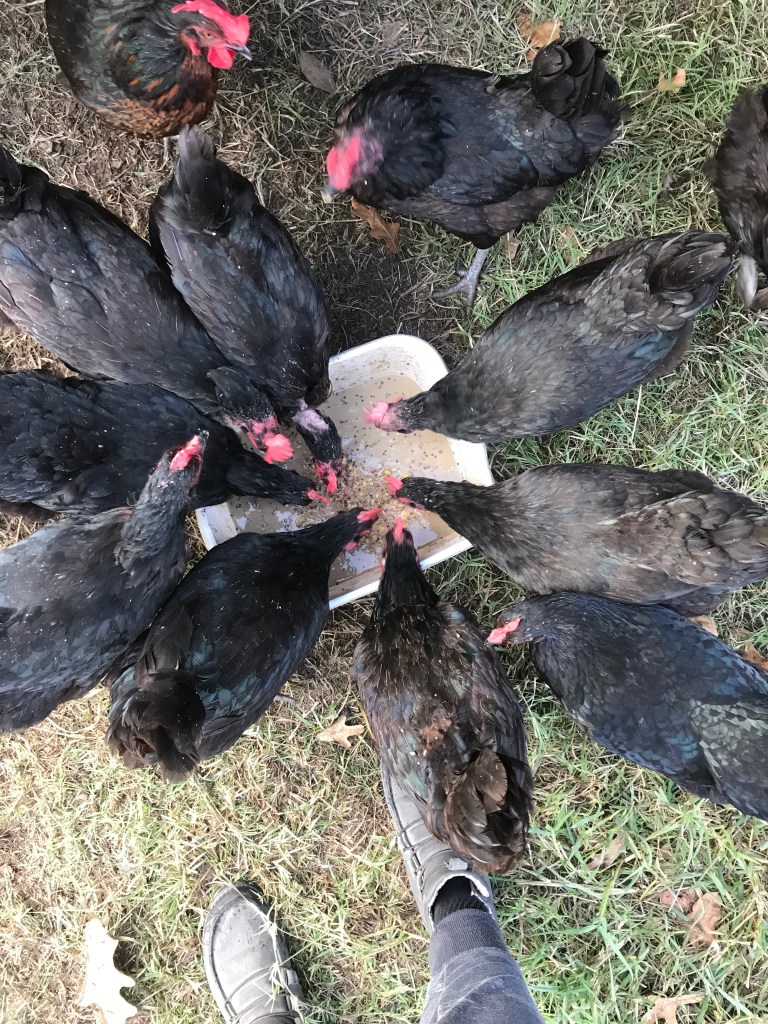
If you want to speed up this process each time you make a new batch, just pour some liquid from the existing batch into the new batch to kickstart your fermentation.
So that’s it. It’s just another little science project that worked here on the farm. Cost effective, easy to do, and no one or animal was harmed in the process. Ta-da!
What are some ways you curb your feed bill or do to improve the health of your flock?
 Elston Farms